
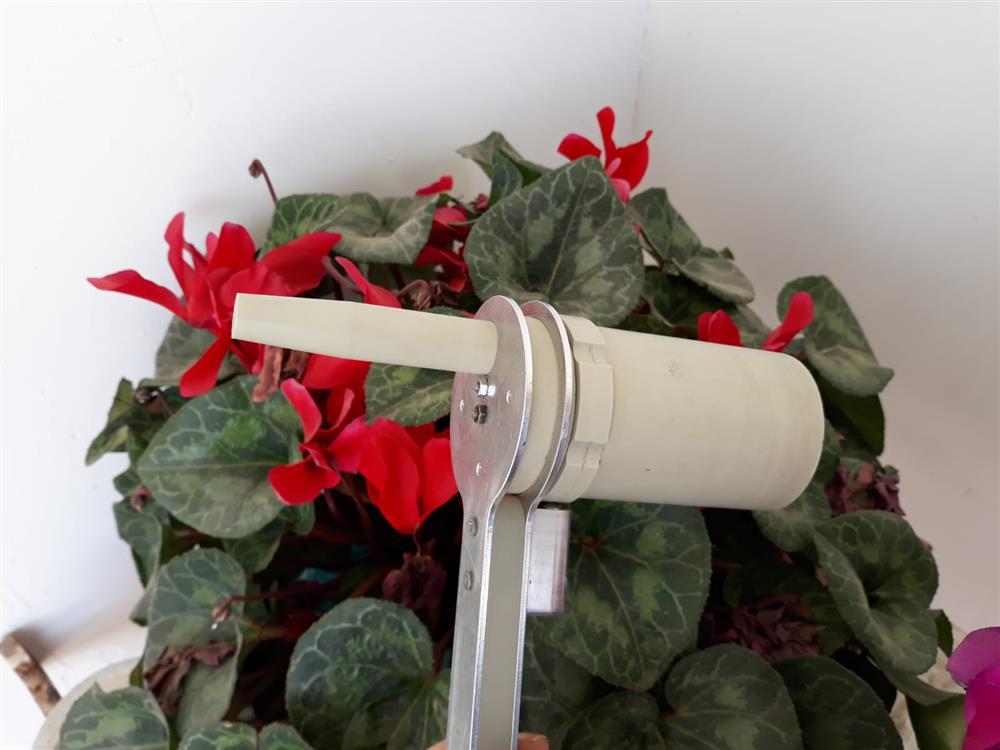
Registration for plants under the Plant Breeders’ Rights Law is a vital step in protecting the development of new plant varieties from unauthorized use or propagation. By obtaining a plant patent, exclusive rights are granted to control, market, and profit from your innovation. However, successfully navigating the Plant Breeders’ Rights Law system or Patent Law requires deep understanding of the process and assistance from a patent attorney or lawyer in the field.
Are you an innovator in the field of plant cultivation? Have you developed a unique and innovative plant variety that you believe has commercial potential? If so, it’s important to know you can protect your hard work and investment through Plant Breeders’ Rights Law registration or patents, sometimes on a process or method and various accessories. In this guide, we’ll accompany you through the process of patent registration / plant breeder’s rights and provide you with important insights on how to navigate the complexity of this special field of intellectual property law through consulting patent attorneys.
The Significance of Plant Patents
A patent for processes and methods as well as plant accessories, or Plant Breeders’ Rights registration, is a special type of intellectual property protection granted to people who invented or discovered a new and distinct plant variety. Unlike utility patents covering new inventions and processes, plants and breeders focus only on new, unique, and innovative plant varieties. This is a plant variety sufficiently uniform in its fundamental characteristics and stability, whose characteristics and description are preserved even after repeated propagation processes. For example, protected plant varieties can be new flowers, hybrid fruit trees, and disease-resistant vegetable crops.
The new plant variety will be registered under the Plant Breeders’ Rights Law, with protection provided not only for the new variety but also for derived varieties. That is, varieties proven to be derived from the plant variety registered according to Plant Breeders’ Rights Law and that preserve its fundamental characteristics, and whose production requires using the registered variety. Unlike a regular patent, breeder’s rights are not granted for the technology behind the development, but for the developed plant variety. Therefore, the protection that Plant Breeders’ Rights Law provides prevents unauthorized or unlawful exploitation of the registered plant variety, considered infringement of rights.
Steps for Plant Registration
Registration for a plant under the Plant Breeders’ Rights Law is a multi-stage process, the main ones being:
A. Conducting Thorough Research
The plant application process begins with thorough research examining and ensuring the uniqueness of the developed plant variety. This research involves identifying existing plants that might be similar to the one being applied for, and assessing the innovation of the plant variety in question. The application is submitted to another authority that is not the Patent Authority.
The Registrar: Section 14. (a) From among employees of the Ministry of Agriculture, the Minister shall appoint a Registrar of Plant Breeders’ Rights (in this law – the Registrar).
B. Presenting the New Variety
The new variety must be presented with quality printed color photographs emphasizing the plant’s appearance and uniqueness. These photographs can be of the entire plant or parts of it such as fruits or flowers. Also, it’s important that the new variety’s name appears clearly on the back of the photograph.
C. Consulting with Patent Attorneys
To ensure a successful registration process and overcome the complexities of the submission process, it’s important to perform it with assistance from experienced patent attorneys. These professionals specialize in reviewing and refining applications, while ensuring they meet legal standards.
D. Submitting Application
An application must be submitted for a patent for breeder’s rights, with all required documentation including photographs of the plant and its detailed description, distinctive characteristics, and supporting evidence for its uniqueness. Application submission involves filling out a technical questionnaire and two original copies of an application form, while filling in all required details in the sections. Also, if the application was submitted by a representative, a power of attorney form must be attached to it. All required fees according to law must be paid online or through the post office bank, and fee payment confirmations must be attached to the application.
Application submission:
(a) In this chapter, “application” – any application or opposition according to chapters D or J.
(b) Every application shall be submitted to the Registrar.
(c) If the Registrar sees that the application includes the details it must include according to this law, he shall transfer it to the Council for discussion and decision.
(d) If the Registrar sees that an application does not include the details it must include according to this law, he shall notify the applicant of its deficiencies; if the applicant does not correct, within a set time, the deficiencies the Registrar notified him of – the Registrar shall reject the application.
E. Review and Examination Process
After application submission, a variety trial will take place examining the new variety’s eligibility for registration. The trial will usually take place in two consecutive growing seasons at a location coordinated in advance with the examiner. A sufficient quantity of plants must be provided for the trial according to the crop type and examiner’s requirements.
F. Granting Plant Right
If the plant application meets all legal requirements and passes the examination process, a plant certificate will be issued for breeder’s rights according to Section 24 of the law: “The Council shall instruct the Registrar to register in the Rights Book a breeder’s right in a variety in the applicant’s name.” This registration grants exclusive rights to distribute, reproduce, and sell the registered plant variety. It’s important to understand the responsibility and obligations accompanying preservation and enforcement of the granted rights.
Importance of Expertise and Reliability
As can be understood, plant registration is a complex process. Therefore, navigating the complexity of plant registration requires special expertise in the field. By employing professionals with experience, you can leverage the knowledge, skills, and insights to strengthen the registration application and increase the likelihood of success.
Contact us for the field of patent registration, including plant registration under breeder’s rights. Consulting patent attorneys can help you in this special field.
For more details in the plant field, you’re invited to contact us at 03-9711011.