
Patent Marketing: How to Turn an Invention into a Commercial Opportunity
Patent marketing is the process of presenting a patented or patent-pending invention to potential licensees, buyers and commercial partners. It combines market research, technical evidence, business positioning and targeted outreach to help relevant companies evaluate an opportunity. Its purpose is to move an invention toward commercial discussions, while keeping expectations grounded in evidence.
For inventors, the challenge often begins after filing a patent application. Who might use the technology? What would make a manufacturer interested? Which information should be shared, and when?
A practical marketing strategy connects the invention to a specific business need and gives potential partners a clear reason to investigate further.
What Does Patent Marketing Involve?
Patent marketing translates technical information into a commercial proposition. A patent document describes an invention and its claimed scope. A commercial presentation explains the customer problem, the proposed benefit and the evidence supporting it.
The process typically includes:
- Identifying relevant applications and customer needs.
- Comparing existing products and alternative solutions.
- Selecting potential licensees, buyers or development partners.
- Preparing technical and commercial presentation materials.
- Planning how confidential information will be shared.
- Conducting focused outreach and tracking responses.
- Supporting technical evaluation and commercial discussions.
The audience matters. A manufacturer may focus on production requirements, while a potential licensee may examine how the technology fits its product portfolio. An investor will also consider the team, funding needs and route to revenue.
Why a Patent Alone Does Not Establish Market Demand
Patent protection and commercial demand answer different questions. An invention may have a distinctive technical feature without solving a problem customers consider urgent or valuable.
Potential partners need to understand whether the proposed improvement justifies development costs, testing, production changes and market introduction.
For example, an industrial component designed to simplify maintenance needs more than a description of its mechanism. A useful commercial presentation would explain the maintenance problem, show how the component works and identify which performance claims have been tested.
Four assessments should remain distinct:
- Technical feasibility: Can the proposed solution work?
- Patentability: Does the invention meet the applicable requirements for patent protection?
- Freedom to operate: Could commercial activity encounter enforceable rights held by others?
- Commercial viability: Can the opportunity support a sustainable business?
In the United States, the USPTO explains that a patent provides a right to exclude others from specified activities; it does not itself grant permission to make or sell the invention. Patent ownership therefore does not establish freedom to operate.
Choosing a Commercialization Route
Before approaching companies, decide what kind of relationship you want to explore.
| Route | What it involves | Main commercial consideration |
|---|---|---|
| Licensing | Allowing another party to use specified intellectual property under agreed terms | Finding a partner with the capability and incentive to commercialize it |
| Patent sale or assignment | Transferring ownership of specified rights | Defining the assets being transferred and their value |
| Product commercialization | Developing and bringing a product to market through your own business | Funding development, production, distribution and support |
| Strategic collaboration | Working with another organization on development or market entry | Agreeing on responsibilities, contributions and ownership |
WIPO distinguishes licensing, where ownership is retained, from assignment, where ownership is transferred. The appropriate structure depends on the opportunity and requires suitable professional advice.
How to Build a Patent Marketing Strategy
1. Define the Customer Problem
Begin with a specific user, task and difficulty.
Ask who experiences the problem, how they currently handle it and what makes existing solutions inadequate. Consider whether the proposed improvement affects cost, reliability, convenience, safety or another meaningful outcome.
A focused statement is easier to evaluate than a broad promise. “Designed to simplify replacement of a hard-to-access component” gives a clearer starting point than “a solution for every manufacturer.”
Treat untested benefits as hypotheses. Market conversations and technical testing should help establish whether they are supported.
2. Select the First Target Market
An invention may have several possible applications. Prioritize an application where the problem is clear and the next validation step is realistic.
Consider:
- The importance of the problem to potential customers.
- Competing products and substitute approaches.
- Compatibility with existing equipment or workflows.
- Testing and regulatory requirements.
- Likely production complexity.
- Access to companies able to evaluate the technology.
Market size alone is insufficient. A narrower application may offer a more practical starting point if relevant users are accessible and the benefit can be demonstrated.
3. Build Evidence Around the Invention
The evidence needed depends on the stage of development and the questions a partner must answer.
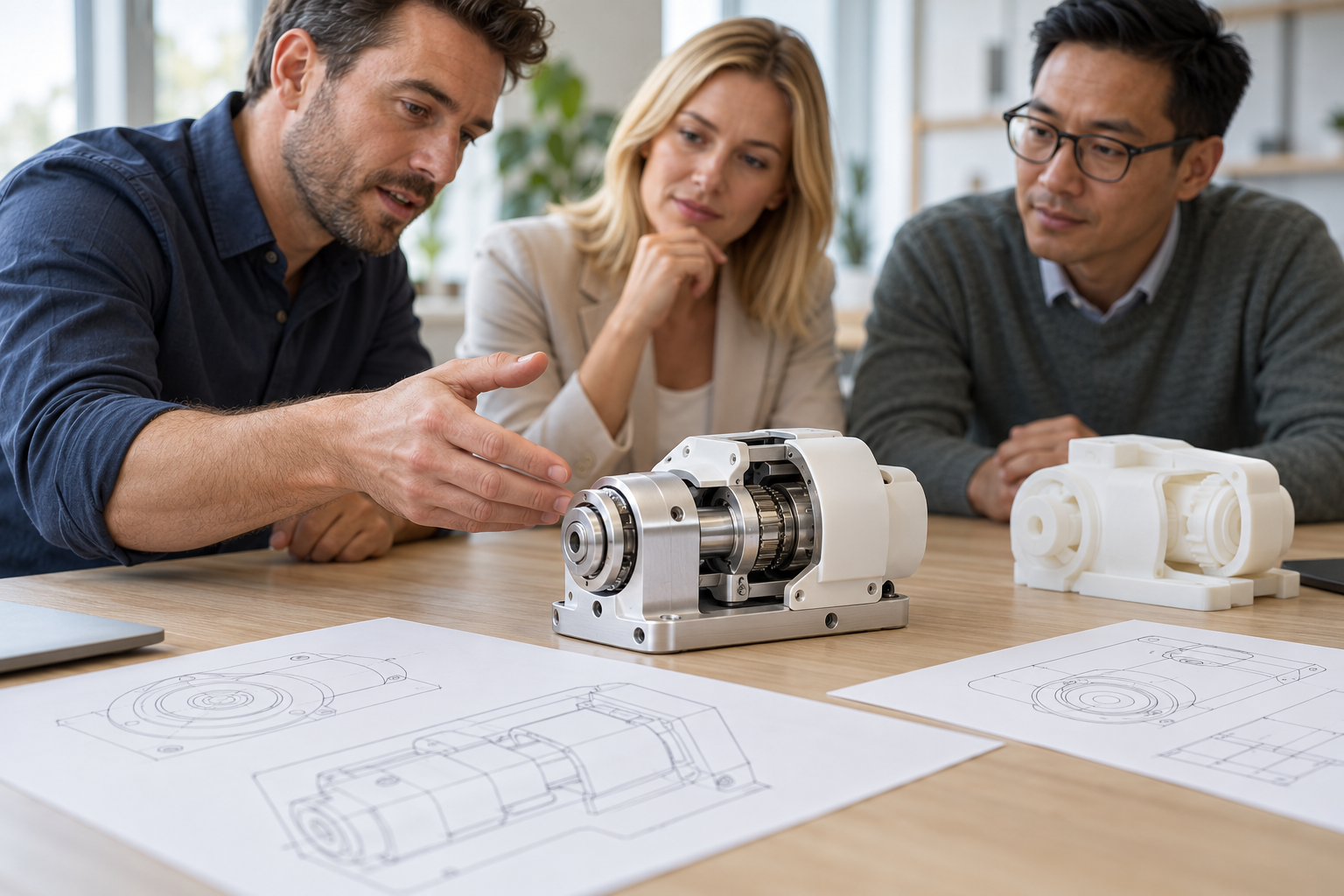
A concept drawing can communicate an arrangement. A functional prototype can help demonstrate operation. A production-oriented design can support a more informed discussion about materials, assembly and manufacturing.
Useful evidence may include:
- Technical drawings and product visualizations.
- Prototype photographs or demonstration videos.
- Test conditions, results and known limitations.
- Feedback from relevant users.
- Preliminary manufacturing assumptions.
- A list of unresolved development questions.
Prototype development should address a defined uncertainty. Before commissioning another iteration, identify what it needs to demonstrate and how the result will influence the next decision.
4. Prepare a Clear Commercial Presentation
A useful patent marketing package allows a company to understand the opportunity before committing substantial evaluation time.
Start with a concise, non-confidential overview covering:
- The problem and intended application.
- The proposed solution and main benefit.
- Current development status.
- Available supporting evidence.
- An accurate description of patent or application status.
- The type of partnership being sought.
Prepare more detailed information for an appropriate later stage. Keep verified results separate from estimates, and identify assumptions behind preliminary production costs or performance projections.
Avoid describing a pending application as a granted patent or implying that protection exists in countries where it has not been obtained.
5. Plan Disclosure Before Outreach
Public presentations, crowdfunding pages, exhibitions and online demonstrations can expose technical details.
WIPO warns that public disclosure before filing can affect patentability, with rules and exceptions varying between countries. Obtain professional patent advice before public disclosure and establish an appropriate confidentiality process for sensitive discussions.
A potential partner’s submission policy also matters. Some companies restrict unsolicited inventions or initially accept only non-confidential material. Review those requirements before sending documents.
For a case-specific legal question, obtain independent advice from a qualified lawyer.
6. Approach Companies with a Relevant Business Case
Build a prospect list around commercial fit. Relevant candidates may already serve the intended customers, manufacture complementary products or have the technical capability to develop the invention.
Each approach should explain:
- Why the opportunity relates to that company.
- Which application or customer need it addresses.
- What evidence is available.
- What next step you are requesting.
A request to review a short non-confidential overview is more concrete than a general invitation to “invest in an exciting patent.”
Track replies and recurring objections. Requests for additional testing, cost information or a different application can reveal what is missing from the proposition.
What Determines Patent Marketing Costs and Timing?
The scope of work depends on the invention’s readiness.
A project with an established prototype and organized documentation requires different preparation from an early concept that still needs engineering validation.
Cost factors can include market research, technical development, testing, visualizations, presentation materials, prospect research and outreach. Independent legal work and specialist assessments should be scoped separately where needed.
Timing also depends on external factors, including a prospective partner’s evaluation process and development priorities. Use milestones such as completing a demonstration or securing a technical review instead of assuming a fixed date for a licensing agreement.
Common Mistakes to Avoid
Patent marketing becomes less useful when claims outpace the evidence.
Common problems include:
- Sending identical presentations to unrelated companies.
- Leading with technical detail before explaining the business need.
- Treating patent filing as proof of customer demand.
- Disclosing sensitive information without a considered plan.
- Presenting estimates as confirmed results.
- Seeking a valuation without explaining its assumptions.
- Measuring activity only through emails sent or presentation views.
More useful indicators include qualified responses, technical evaluation requests, demonstrations and agreed next steps. These indicate progress, although none guarantees a transaction.
Preparing Your Invention with Av Tipus
Av Tipus connects product development, engineering planning, prototype construction and commercialization preparation. Its patent-related process involves a technical team working in coordination with consulting patent attorneys.
Depending on the project stage, support can include developing technical materials, preparing product presentations and identifying potential commercial partners. The company’s invention marketing and commercialization support includes preparing relevant marketing materials and approaching potential interested parties.
The appropriate starting point depends on what is already available and what a prospective partner still needs to evaluate.
Patent Marketing Readiness Checklist
Before beginning outreach, check whether you can:
- Explain the problem and intended user clearly.
- Identify a realistic first application.
- Describe the invention’s current development stage.
- Present evidence without overstating results.
- State patent or application status accurately.
- Separate non-confidential material from sensitive information.
- Identify suitable companies and their submission requirements.
- Define the partnership you want to explore.
- Explain the next technical or commercial milestone.
Frequently Asked Questions
Can I Market an Invention While Its Patent Application Is Pending?
Commercial discussions may take place while an application is pending, but disclosure and presentation require care. Describe the status accurately and avoid implying that a patent has already been granted. Obtain professional advice on what can be shared, particularly where additional technical developments or future filings may be involved.
Do I Need a Prototype Before Contacting Potential Licensees?
The appropriate evidence depends on the invention and the potential partner. An initial overview may begin a conversation, while further evaluation may require a demonstration or test results. Determine which uncertainty a prototype would resolve before investing in its construction. A presentation model and a functional prototype serve different purposes.
How Can I Find Companies Interested in My Patent?
Identify companies with relevant products, customers, manufacturing capabilities or development interests. Review their publicly available partnership and invention-submission information. Build a focused list and explain the specific fit in each approach. A company operating in the same industry is a possible prospect, rather than evidence of actual interest.
How Is a Patent’s Commercial Value Assessed?
A commercial assessment considers the rights involved alongside market demand, competing solutions, development costs and the potential economic benefit. Ownership, legal status and geographic coverage also matter. There is no universal price based solely on having a granted patent. Valuation should make its assumptions clear and draw on appropriate specialist input.
Does Patent Marketing Guarantee a Licensing Agreement?
No. Outreach can help potential partners discover and evaluate an invention, but a transaction depends on technical evidence, commercial fit, development risk and acceptable terms. A useful process produces informed decisions and identifiable next steps. It may also show that further development or a different market application is needed.
Discuss the Next Step for Your Invention
Whether you have an early technical concept, a prototype or a patent application, begin by identifying what a potential partner needs to understand next.
Contact Av Tipus to arrange a confidential introductory discussion about the technical development and presentation stages appropriate for your project.
This article provides general information and does not constitute legal advice. Patent rules and rights vary by jurisdiction and circumstances. Av Tipus provides technical development and coordinated patent-process support. Case-specific legal matters require independent advice from a qualified lawyer.